Image
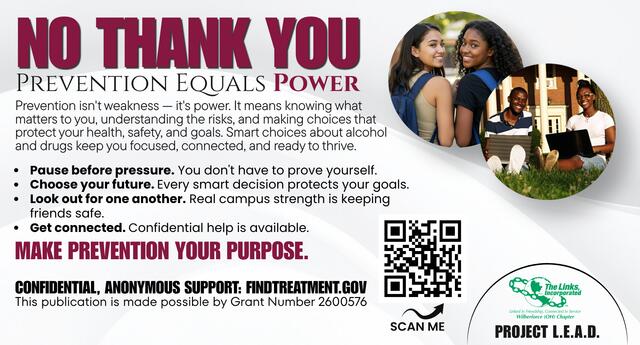

Central State University is strengthening its commitment to student wellness through the “No Thank You” campaign, a substance misuse prevention and awareness initiative brought to campus by the Wilberforce (Ohio) Chapter of The Links, Incorporated.
Centered on the message “Prevention Equals Power,” the campaign encourages students to make informed decisions, establish personal boundaries and look out for one another when navigating social situations involving alcohol, illicit substances and vaping.
Through campus monitor messaging, educational outreach and community partnerships, the initiative provides students with practical language and resources to help them recognize risks, resist pressure and make choices that protect their health, safety and future.
The effort reflects the chapter’s belief that prevention education should begin before a crisis occurs and that young adults should have access to information and support as they navigate the responsibilities and challenges of college life.
The “No Thank You” campaign is part of Project L.E.A.D. (Links Erase Alcohol and Drug Abuse: High Expectations), a signature program of The Links, Incorporated, established in 1988 to address alcohol and drug abuse through education, awareness and community service.
In 2018, the Columbus (Ohio) Chapter of The Links, Incorporated, conducted research that identified Ohio as having the second-highest number of deaths from opioid overdoses in the nation at that time. In response, the chapter established the “No Thank You” campaign to address the effects of substance abuse and misuse in Ohio and support the organization’s broader prevention efforts.
The Columbus Chapter developed the campaign in alignment with Project L.E.A.D., seeking to make a transformational difference in communities through service and education. The initiative has since provided a framework for local chapters to address substance misuse and its effects on the populations they serve.
The Wilberforce Chapter, chartered in 1950, serves Greene County and joined the campaign in 2025. Its approach emphasizes education, awareness and support, with a particular focus on reaching college students.
The chapter’s decision to bring the campaign to Central State reflects an ongoing concern about the pressures facing young adults and recognition that prevention information must be visible, accessible and sustained.
Research previously conducted by the Columbus Chapter found that 41.4% of young adults ages 18-25 included in the study were more likely to obtain opioids for free from friends or relatives. The finding highlights how substance exposure can occur within familiar social circles, reinforcing the importance of equipping young adults to recognize risks and make informed decisions.
Substance misuse can affect communities in different ways, including through illicit substances, alcohol and vaping. The campaign addresses these concerns by encouraging students to understand potential consequences and recognize that they can make choices that support their well-being.
At the heart of the campaign is a straightforward message: Students can decline substances or situations that make them uncomfortable without feeling obligated to explain or defend their decisions.
The words “No Thank You” provide a simple, respectful response students can use to maintain self-control, establish boundaries and step away from situations that could put their health, safety or future at risk.
Cheryl Marcus, chapter chairwoman of the Wilberforce Chapter of The Links, Incorporated, said the campaign’s campus messaging reflects the chapter’s commitment to prevention before a crisis occurs.
Our messages placed on the campus monitors grew from our chapter’s commitment to service and from our recognition that prevention has to begin before a crisis occurs. College students are expected to make independent decisions, to build new relationships, and to navigate new social settings. We wanted to meet them in that moment with a message that is positive, memorable, and empowering—not judgmental. Our goal is to encourage informed choices, honest conversations, and to promote a culture in which asking for help and protecting one another are signs of strength, Marcus said.
The chapter’s targeted message, “Prevention Equals Power,” reinforces the idea that knowledge and preparation expand a person's choices. Rather than approaching substance misuse prevention through fear, blame or judgment, the campaign seeks to empower students with the confidence to act in their own best interests.
By encouraging students to recognize potential risks, communicate their boundaries and look out for one another, the initiative promotes a campus culture in which making informed decisions and seeking help are viewed as signs of strength.
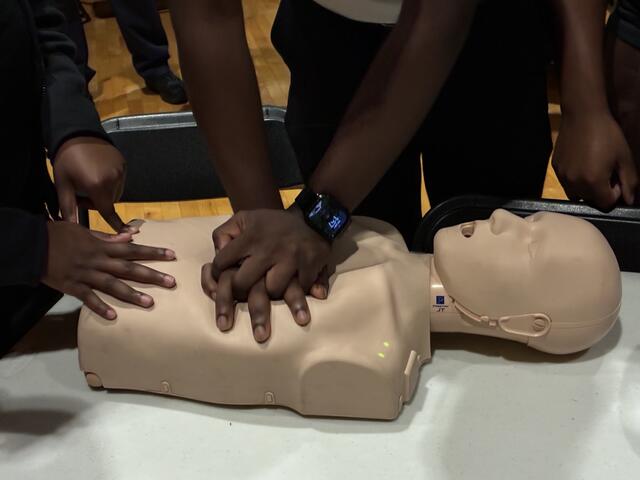
During the 2025-26 program year, the Wilberforce Chapter introduced the campaign to college campuses for the first time. At Central State, the effort extended beyond awareness messaging through a partnership with the university’s Office of Residence Life, the Greene County Public Health Department and the Xenia City Fire Department.
Together, the organizations provided a training workshop for resident advisers that covered cardiopulmonary resuscitation, first aid, anti-stigma education and naloxone administration.
The training equipped resident advisers with information and practical skills relevant to student safety and substance-related emergencies. It also supported the campaign’s broader goal of reducing stigma and encouraging individuals to seek assistance when needed.
The involvement of university personnel and community organizations demonstrates the importance of collaboration in prevention and wellness efforts. By connecting education with practical training and available resources, the initiative seeks to help students and those who support them respond more effectively to challenging situations.
The chapter also recognizes that access to resources and clear directions on where to find assistance are essential components of prevention. Its approach includes providing information and guidance to available resources when needed.
October is National Substance Abuse Prevention Month, providing an opportunity to emphasize the importance of prevention education, early intervention and access to support.
The Wilberforce Chapter encourages students to use this time to better understand substance-related risks, recognize peer pressure, identify their personal boundaries and become familiar with available resources.
The “Prevention Equals Power” message is intended to reinforce that preparation gives students greater control over their decisions. With knowledge and support, students can make choices that protect their dreams and goals, health and financial well-being, and long-term futures.
The campaign also emphasizes the importance of looking out for others. Recognizing when a friend may be at risk, knowing how to respond and understanding when to seek assistance can contribute to a safer and more supportive campus environment.
Rather than simply telling young adults what not to do, the chapter seeks to provide the tools they need to approach difficult decisions with confidence.
The Wilberforce Chapter views its work at Central State as an ongoing commitment, not a one-time event.
As the campaign continues, the chapter plans to build on lessons learned, respond to current student needs and explore new ways to make its prevention message meaningful and effective. Although the format of future outreach may evolve, its central purpose will remain consistent: ensuring students have the knowledge, language and support they need before facing difficult decisions.
The chapter’s continued involvement reflects the service mission of The Links, Incorporated and its dedication to supporting the well-being of young people throughout the community.
Through campus awareness, educational partnerships and access to resources, the “No Thank You” campaign reinforces a message for Marauders and the broader Central State community: Prevention is a proactive choice, setting boundaries is a strength, and seeking help can be an important step toward protecting one's future.