Image
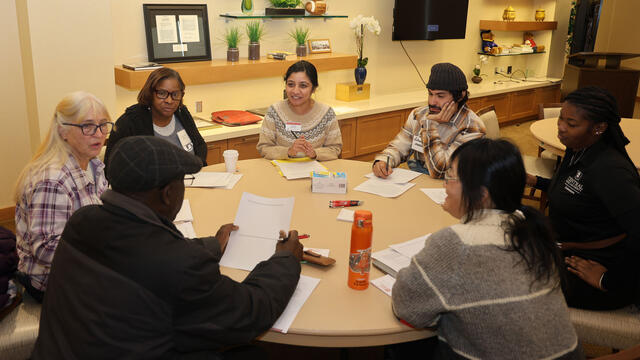
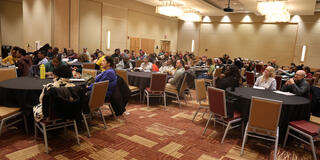
Central State University Extension recently concluded its two-day Urban and Small-scale Farm Connection Conference at CSU’s Wilberforce campus, bringing together nearly 200 farmers, researchers, Extension educators, and partners from across Ohio to share practical solutions and farmer-led insights.
The Jan. 23-24 event created space for learning, collaboration, and farmer-led dialogues focused on strengthening Ohio’s urban and small-scale farming systems. The annual conference brought together growers from urban neighborhoods, rural communities, and regional food hubs to explore shared challenges and solutions. Participants engaged across multiple, concurrent tracks, panel discussions, and hands-on mini sessions covering production, business development, soil health, technology, and market access.
Jose Toledo, Ph.D., director of Central State University’s 1890 Land‑Grant Programs, reminded the largely farmer audience of the University’s long-standing commitment to its tripartite Land‑Grant mission of Extension, research, and teaching. He emphasized that the mission not only prepares students for today’s workforce but also generates new knowledge for farmers and communities and delivers outreach across 42 Ohio counties served by CSU Extension educators.
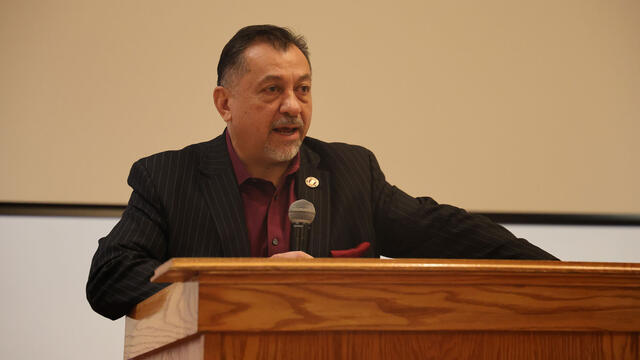
“Today’s event is a clear example of these missions working together—especially in service to Ohio’s urban and small‑farm producers,” Dr. Toledo said. He noted that a central goal of the conference is to share practical, research‑based information farmers can put to use immediately, while also connecting them with program resources and partner agencies that can strengthen their production practices.
“Today’s event is a clear example of these missions working together—especially in service to Ohio’s urban and small‑farm producers.”
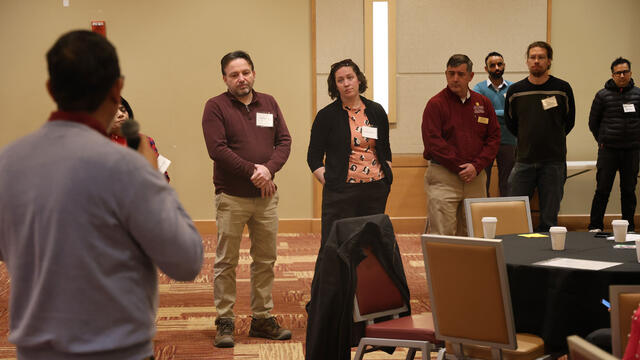
CSU President Dr. Morakinyo A.O. Kuti welcomed attendees and underscored Central State University’s historic role as a Historically Black College and University, founded in 1887 to expand access to education.
“HBCUs were created to provide opportunities for everyone,” Dr. Kuti said. “We have an enduring responsibility to make a direct impact on the quality of life of all people—no matter where they come from.”
Expert-led Sessions and Listening Forums
The conference combined expert-led sessions with listening forums that elevated lived farming experience alongside university research.
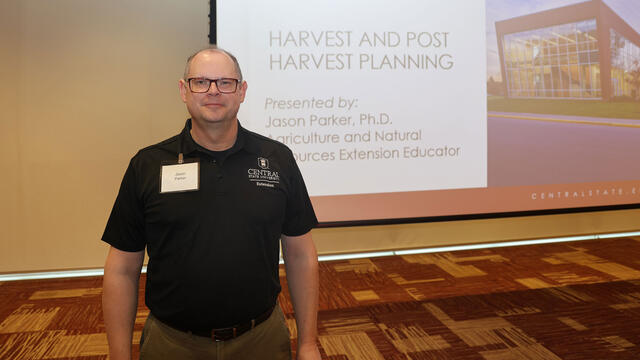
An example of one of the sessions was one led by Jason Parker, Ph.D., Agriculture and Natural Resources Extension educator (Northeast Region). The mini session titled “Harvest and Post-Harvest Plan” framed the farm as an integrated system—covering harvest timing, crop-specific techniques aligned with Good Agricultural Practices (GAPs), projecting yields, and step-by-step prep and harvest-day workflows.
“I approached harvest and post-harvest as a systems problem—timing, technique, yield projections, and food safety practices need to work together,” Dr. Parker explained. “When farmers align their harvest plans with GAPs, they protect product quality, efficiency, and their customers.”
Parker also fielded questions on field cooling, cleaning and sanitizing equipment, water testing for irrigation and wash uses, and GAP certification pathways—needs that surfaced across small and urban farms.
Six Snapshots of What the Conference Covered
Guided by Experienced Facilitation
Eight moderators helped shape inclusive, farmer-centered conversations across tracks, from technical flash talks to peer panels and regional listening sessions.
From the Ground Up Podcast Recording
One of the highlights of the second day was a live, 45-minute podcast recording spotlighting "From the Ground Up," a USDA-funded, farmer-led research project, aimed at improving farmer conservation practices in Ohio and Missouri. CSU is partnering with Ohio State University, the University of Missouri, and Lincoln University for the five-year project.
Looking Ahead
Conference insights will inform future CSU Extension programming, on-farm research, and partnerships statewide—continuing CSU Extension’s work to support resilient, equitable, and sustainable local food systems.