Image

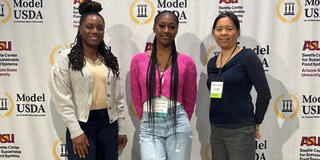
Two Central State University students — Royalty Hightower and Donniesha Hawkins — were among nearly 200 who gathered recently at Arizona State University’s Tempe campus to participate in an intensive national roleplaying conference titled “Model USDA.”
“Model USDA is a multiday experiential learning simulation that immerses students in food, agriculture, nutrition, forestry, and related policy issues under the jurisdiction of the U.S. Department of Agriculture (USDA) and its federal partners,” according to the conference website.
“Rather than learning about policy through lectures or debates, participants are placed directly inside a simulated policy environment. Each student is assigned:
In her assigned role as a chief science officer, Hightower emphasized that national nutrition recommendations must remain rooted in rigorous scientific evidence and responsive to emerging health challenges. She highlighted how dietary guidelines influence programs, policy, and public education nationwide.
“Diets already recommended in the Dietary Guidelines like those higher in fruits, vegetables, whole grains, and plant-based proteins are linked to better health and place less stress on the environment,” explained Hightower, a junior sustainable agriculture major.
Hightower also spoke of the need for long-term sustainability in the food system, arguing that protecting public health for future generations depends on environmentally resilient food production.
Hawkins, a senior sustainable agriculture major serving in the role of director within USDA’s nutrition education division, stressed the power of education to transform communities.
“The goal is to expand nutrition education to improve food literacy, and support environment stewardship to ensure a sustainable, healthy, and livable planet for current and future generations,” she said.
She also discussed how limiting ultra-processed foods in dietary guidance supports both human health and environmental sustainability, noting that these changes influence what foods qualify for national nutrition-assistance programs.
Reflecting on the value of the conference, CSU research faculty mentor Dr. Hongmei Li-Byarlay, associate research professor of entomology, praised the experience: “Exposure to national conferences like Model USDA helps CSU students majoring in sustainable agriculture connect classroom learning to real-world impact.” She added that such opportunities build confidence, expand networks, and help students see themselves as future leaders in agriculture policy, research, and practice.
The experiential learning experience for Hightower and Hawkins exemplifies CSU’s commitment to cultivating the next generation of problem-solvers and public-sector innovators.