Image
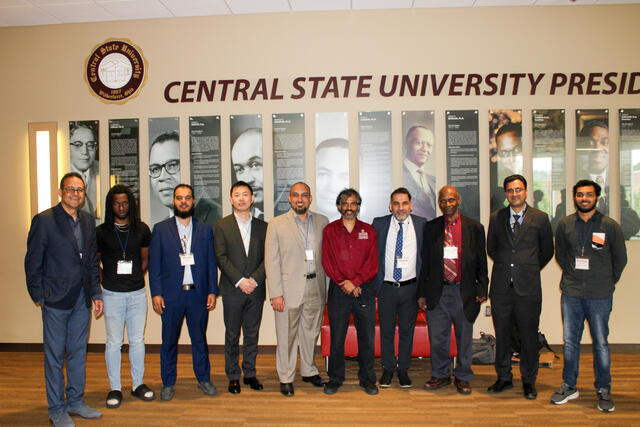
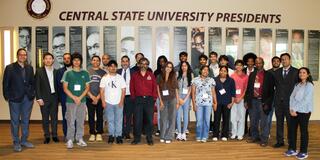
Eight Central State University students spent the summer gaining hands-on experience in one of the nation’s fastest-growing technology fields through an Intel-supported summer internship focused on semiconductors and microelectronics.
The eight-week program, held June 1 through July 24, brought together 48 undergraduate and high school students for intensive classroom instruction, laboratory activities and technical training designed to introduce participants to semiconductor technologies while preparing them for future academic and career opportunities.
The program has experienced significant growth since its launch in 2023. That first year included 20 interns representing four universities and four high schools. By 2024, participation increased to 39 interns from 10 universities and five high schools. In 2025, the program expanded to 46 interns representing 14 universities and six high schools.
The 2026 cycle further expanded the program's reach, with 560 applicants and 48 selected interns representing 31 distinct institutions.
A defining feature of the 2026 program was the expansion of training sites. After operating with three in-person training sites in 2025, the program expanded to seven locations across six states: Central State University in Ohio, Prairie View A&M University in Texas, Fayetteville State University in North Carolina, Clark Atlanta University in Georgia, North Carolina A&T State University in North Carolina, the University of Michigan in Michigan and SUNY-Binghamton in New York.
The expansion provides students across multiple regions with access to hands-on semiconductor and microelectronics training while strengthening collaboration among institutions preparing students for opportunities in the industry.
Mohammadreza Hadizadeh, Ph.D., professor of physics at Central State, said the program's growth demonstrates the strong interest students have in semiconductor and microelectronics education.
“Last year, we had 390 applications; this year, we received 560,” Hadizadeh said. “The expansion of the training site, from one training site in 2023 to seven training sites this year, means that we have had great support from Intel and the National Science Foundation to scale up this program.”
The internship is designed to serve as more than a summer learning experience. Faculty members view it as part of a broader pipeline connecting students to undergraduate education, industry careers and graduate study.
Hadizadeh said the program's long-term goals include encouraging high school students to pursue undergraduate studies in semiconductor-related fields while preparing current college students for careers and advanced education.
“For our undergraduate students, our goal is to prepare them for the next step — jobs in the industry, specifically for Intel, Ohio and the national needs that we have in the semiconductor,” Hadizadeh said. “And, of course, providing opportunities for them for the graduate program and prepare them for the graduate program.”
The internship also incorporates technical micro-credentials and foundational laboratory experiences intended to give students tangible skills they can carry into future academic and professional opportunities.
Kandiah said the timing of the program is particularly significant as demand for semiconductor expertise continues to grow alongside emerging technologies such as artificial intelligence.
“It shows, basically, the demand for these things at this particular time,” Kandiah said. “If you go and look into the semiconductors, AI is in there, everywhere.”
For many students, choosing a career begins with exposure — the opportunity to see a field up close and imagine themselves belonging in it.
The eight-week internship, held June 1 through July 24, was designed to provide exactly that experience.
Students spent their mornings learning the fundamentals of semiconductors and microelectronics and their afternoons putting those lessons into practice through hands-on laboratory activities.
At Central State, interns explored semiconductor simulation, 3D printing fabrication and testing, Arduino programming, smart electric vehicle systems, electric transportation, power systems, artificial intelligence, Python programming, machine learning, modern manufacturing, industrial automation and introductory quantum science.
The experience offered students more than an introduction to technical concepts. It gave them a chance to connect those concepts to the world beyond the university.
Bisshoy Bin Razzak, a computer science student at Central State, said being part of the program offered an experience that extended beyond simply learning about semiconductors.
“I’m pretty excited because learning about semiconductors in your own university keeps a different vibe, a different culture, and also meeting with different people from different sites, and even with high schoolers, that also gives a little bit of different kind of experience,” Bin Razzak said.
For Bin Razzak and his fellow interns, the summer provided an opportunity to learn alongside students at different stages of their educational journeys and to build connections that could extend beyond the program.
Opening Pathways for Purpose
The internship is structured to welcome students who may not have previously considered themselves part of the semiconductor industry.
No prior experience in microelectronics is required. Undergraduate students enrolled in degree programs and high school students can participate with a basic understanding of high school mathematics.
That accessibility is intentional.
The program creates an entry point for students to discover opportunities they may not otherwise encounter — and potentially changes the trajectory of what they believe is possible for their education and careers.
Of the 48 interns selected in 2026, 14 were high school students, representing 29.2% of the cohort.
For those students, the experience can provide an early glimpse into college-level technical education and careers in a field increasingly connected to artificial intelligence, advanced manufacturing, transportation and other emerging technologies.
Ramanitharan Kandiah, Ph.D., P.E., professor of environmental engineering and interim dean of Central State's John W. Garland College of Engineering, Science, Technology, and Agriculture, said the experience can strengthen students well before they begin their professional careers.
“They are learning the basics,” Kandiah said. “The micro-credentials will actually back them up.”
For high school students, he said, the experience can also strengthen their college applications while preparing them for what they will encounter academically.
The hope is that some of those students will eventually return to Central State — not as high school interns, but as Marauder undergraduates pursuing computer science, manufacturing engineering or related fields.
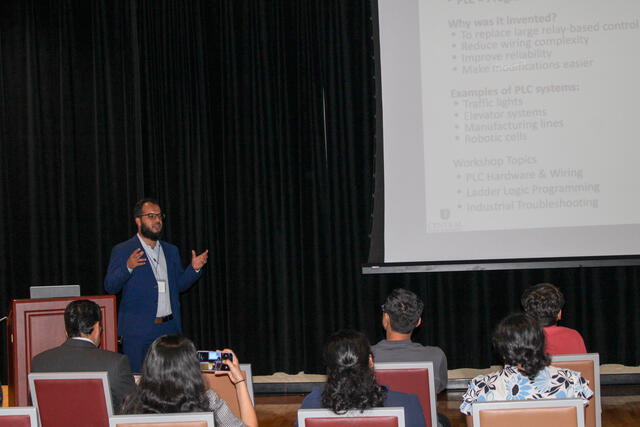
When the interns left the program July 24, they took more than memories from a summer on campus.
They left with technical experience, new connections and exposure to a field that is helping shape the future of technology.
For Central State, the hope is that the experience becomes a starting point rather than an ending.
Hadizadeh said faculty want students to enjoy their time on campus, develop an interest in semiconductors and microelectronics, and use the experience to pursue further education and careers in the field.
Kandiah sees a similar opportunity in the students' growing awareness of the demand for semiconductor talent, particularly as artificial intelligence and other emerging technologies continue to expand.
And for students like Bellot, the impact is deeply personal.
His goal is not simply to enter an industry. He wants to take what he learns and eventually bring it home.
“I would like to go back and help remodel the roads and infrastructure to make my community a little better,” Bellot said.
That is the promise of programs like the Summer Internship Program: The impact does not have to end when the internship does.
For the students who participated, the summer may become the first chapter in careers that reach far beyond Central State — into laboratories, manufacturing facilities, technology companies, graduate programs and communities around the world.